
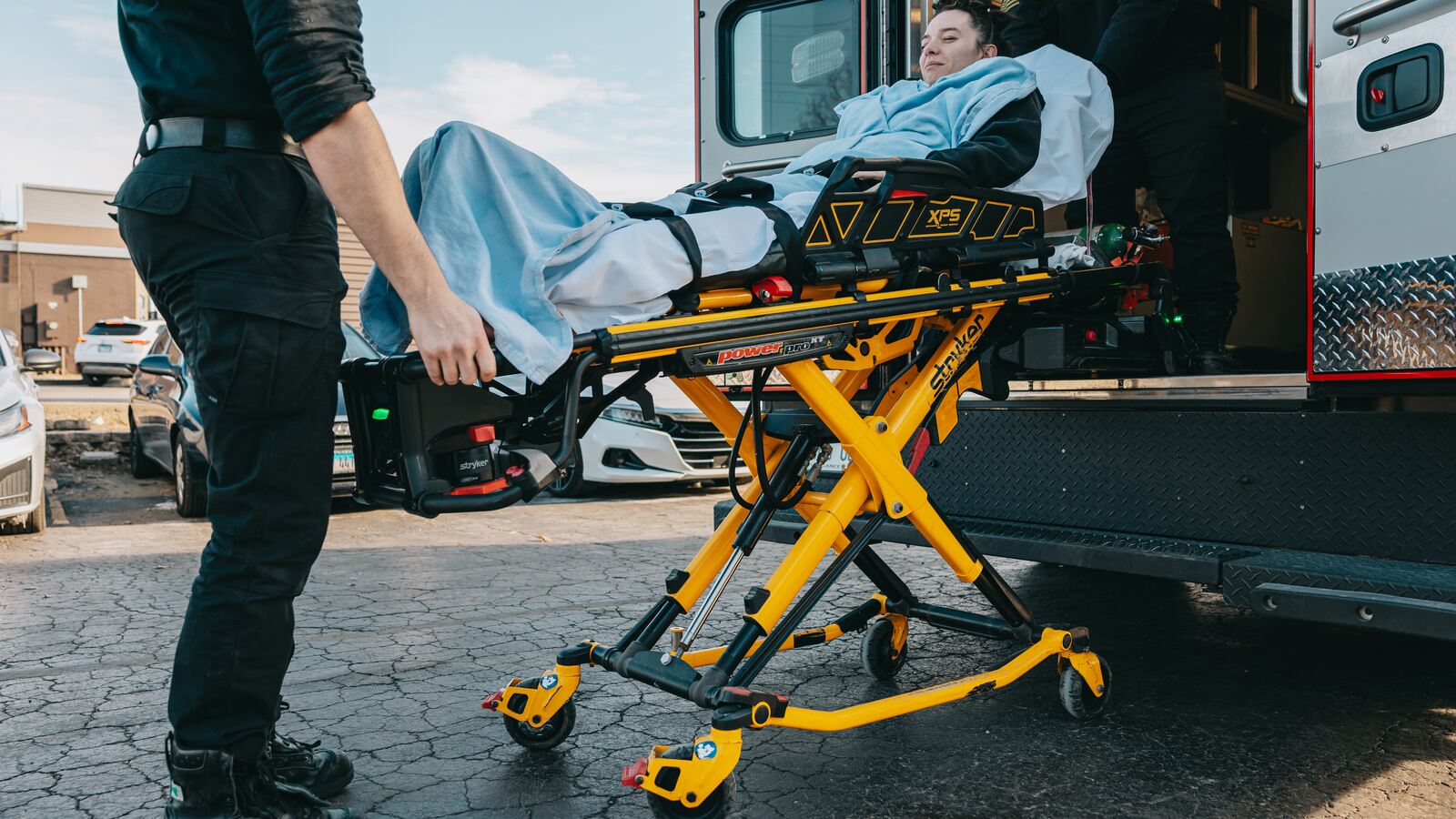
Is it a 911 call or an interfacility transport? A clear breakdown of when to use each, the three levels of interfacility transport, and who arranges it.
The doctor at the hospital tells you that Grandma is ready for discharge, but she still needs oxygen and can't safely be moved in a car. The nurse says "we'll arrange transport." A day later, a discharge planner asks whether you want them to book the ambulance, and you're suddenly wondering: is that a 911 call? Is that something I'm supposed to pay for? Who schedules that?
It's a common confusion, and the stakes are real. Calling 911 for a stable, scheduled move ties up an emergency crew that might be needed elsewhere. Trying to transport a fragile patient in a personal vehicle can be dangerous — and sometimes impossible, depending on the level of care required. The right answer is almost always interfacility medical transport, and understanding the difference is worth a few minutes.
The core distinction, in one paragraph
911 exists for emergencies — unpredicted, time-sensitive situations where someone's condition is deteriorating and rapid medical intervention is required. Interfacility medical transport exists for planned moves — stable patients moving between healthcare facilities (or between a facility and home) under medical supervision. Both use ambulances. Both use trained EMS crews. But the purpose, the coordination, and often the level of care required are completely different.
When to call 911
If you've read our guide on when to call 911 vs. drive to the ER, you already know the short version: if the person is struggling to breathe, losing consciousness, showing signs of a stroke or heart attack, bleeding severely, or getting worse fast — call 911. That's the emergency lane.
When interfacility transport is the right call
Interfacility transport is the answer when:
- A hospital is discharging a patient to a skilled nursing facility, rehab, or home, and the patient needs medical monitoring or equipment during the move
- A patient is being transferred from one hospital to another for a higher level of care — a rural ED sending a cardiac patient to a regional heart center, for example
- A nursing home resident needs to go to dialysis, a specialty appointment, or a same-day procedure
- A patient is returning home from a hospital stay but still requires oxygen, cardiac monitoring, or IV therapy during transport
- A scheduled procedure or imaging study requires the patient to travel and they can't safely use private transport
The key word in every one of those scenarios is stable. If a patient is stable but fragile, the right move is a scheduled ambulance — not 911, and not a family member's car.
The three levels of interfacility transport
Not every interfacility trip looks the same. The level of care required dictates the crew and the truck that shows up.
Basic Life Support (BLS) — For stable patients who don't need advanced medical intervention en route. Staffed by EMTs. Handles most discharges to home, SNF transfers, and dialysis runs where the patient's condition is unlikely to change during transport.
Advanced Life Support (ALS) — For patients who may require medications, IV therapy, advanced airway management, or cardiac monitoring during the move. Staffed by paramedics. Common for hospital-to-hospital transfers, post-op patients, or anyone on active treatment who could destabilize during a longer trip.
Critical Care Transport — The highest level of interfacility care. For patients on ventilators, multiple IV drips, balloon pumps, or other intensive monitoring typical of an ICU setting. Staffed by critical care paramedics, sometimes with a specialty team on board. Common for neonatal, pediatric, cardiac, and trauma transfers between hospitals.
If you don't know which level a patient needs, that's fine — the sending facility or the transport company will figure it out based on the medical picture.
Who typically arranges it
In almost every case, the sending facility arranges interfacility transport:
- Hospitals have case managers and discharge planners who coordinate directly with ambulance providers
- Skilled nursing facilities typically have a point person for scheduling outside transports
- Families occasionally book interfacility moves directly — for example, moving a loved one from a hospital to a facility closer to home
If you're a family member navigating this, ask the hospital's case management team first. They almost always already have transport partners lined up.
What to expect
A scheduled interfacility crew looks and acts different from a 911 response. Lights and sirens are rarely used. The crew has already reviewed the patient's chart before they arrive. Paperwork, medications, and equipment are coordinated in advance. The pace is calm and deliberate. The patient is usually already briefed on what's happening.
For a well-run interfacility run, the patient should feel like they're in the hands of professionals who are there specifically for them — not responding to a crisis.
Where Northwest Rescue fits in
Northwest Rescue provides BLS, ALS, and critical care interfacility transport across northern Illinois, with stations in Harvard, Rockford, Loves Park, and Ottawa. We partner with regional hospitals, skilled nursing facilities, rehab centers, and dialysis centers to coordinate planned moves alongside our 911 response work.
Our dispatch team schedules transports, confirms medical orders, and matches the right crew and equipment to the patient's needs. For facilities, we're a direct line to a reliable partner. For families, we're the crew that shows up to move a loved one safely when the hospital says it's time to go home.
Bottom line
If the situation is an emergency, call 911. If the situation is planned, medically supervised, and the patient is stable, interfacility transport is the answer. Getting those two buckets right protects the patient, respects the system, and makes the whole move smoother.
If you need to schedule interfacility transport in our coverage area — or if you're a facility looking to formalize a transport partnership — reach out to our dispatch team. That's what we're here for.
Related reading
- When to Call 911 vs. When to Drive to the ER: A Practical Guide
- Pediatric & Neonatal Transport: Why a Specialized Team Matters
- Standing Up for Rural EMS: Why Coverage Matters in Small Towns
Need to book a transport? Contact our dispatch team or reach out directly to our office.