
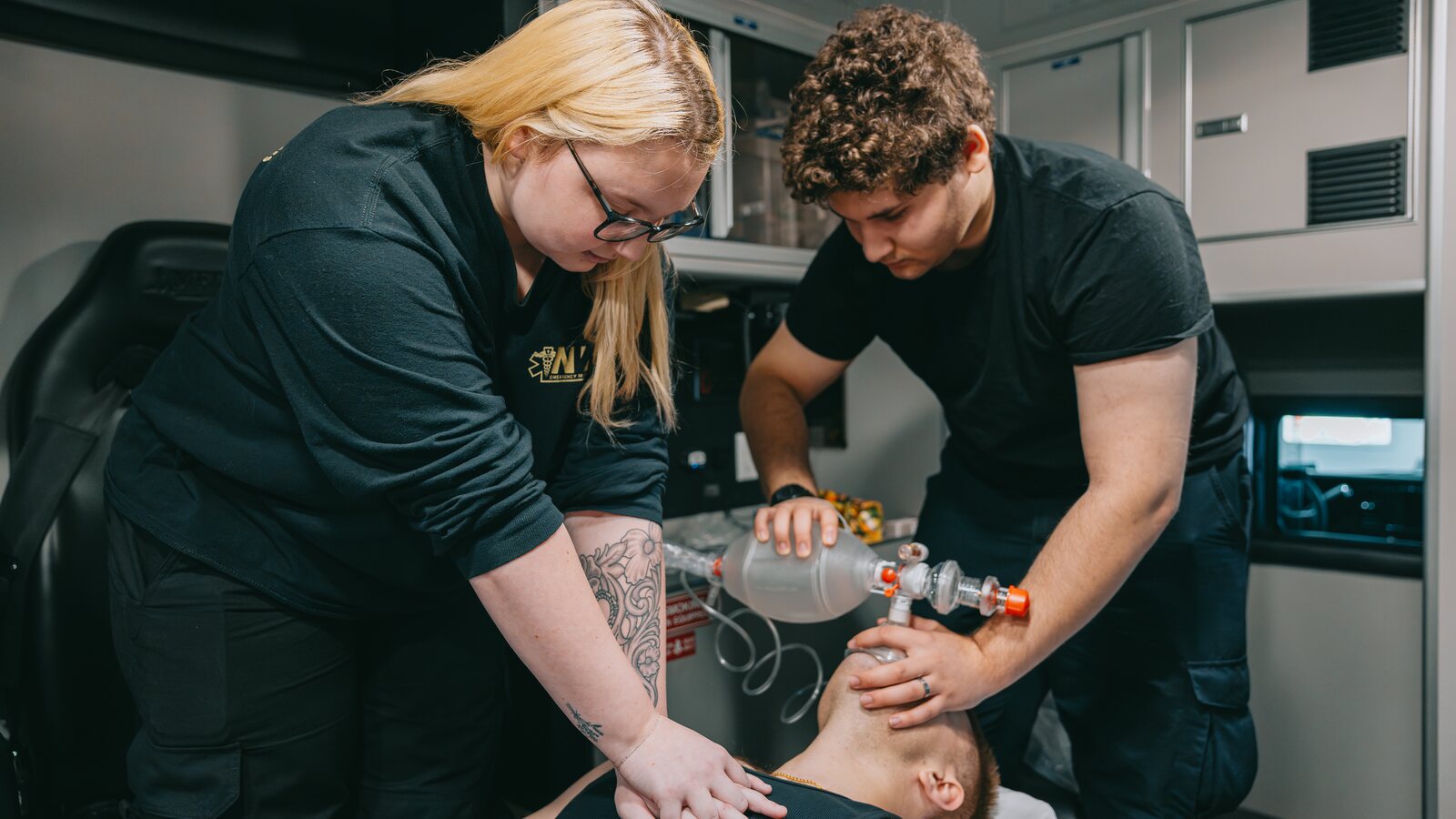
Bystander CPR can double or triple cardiac arrest survival. A step-by-step guide to hands-only CPR from Northwest Rescue's professional medics.
In the United States, more than 350,000 cardiac arrests happen outside of a hospital every year. Most of them happen at home, in front of family. The rest happen in offices, gyms, restaurants, parking lots, grocery stores, and every other ordinary place people live their lives.
The single biggest factor in whether someone survives — bigger than ambulance response time, bigger than which hospital they end up at — is whether a bystander starts CPR before EMS arrives.
Bystander CPR can double or triple the chance of survival. And the version you need to know is simple enough to learn in the next 10 minutes.
This guide is written by professional medics at Northwest Rescue, built specifically for family members, coworkers, and anyone else who might be the person in the room when it matters.
What is hands-only CPR?
Hands-only CPR is CPR without rescue breaths. You do chest compressions at a steady, rapid pace until professional help arrives.
For decades, CPR instruction included rescue breathing — mouth-to-mouth with a mask or barrier. That version is still useful in some clinical and pediatric situations. But for the average bystander witnessing an adult cardiac arrest, research has shown continuous chest compressions alone produce outcomes just as good as conventional CPR.
The simpler version is also the more effective one for bystanders, because the biggest failure mode in bystander CPR is hesitation. People don't start because they're not sure they remember the breath ratios, they're worried about mouth-to-mouth contact, or they freeze. Hands-only CPR removes every reason to hesitate.
Two steps: call 911 and push hard, push fast.
Step 1 — Check the person and the scene
Before you approach, make sure the scene is safe. If someone collapsed in the street, don't walk into traffic to reach them. If there's fire, gas, water, or electrical risk, get the person moved if it's safe to do so — or wait for professionals if it isn't.
Then check the person:
- Tap and shout. Tap their shoulder firmly and shout, "Are you okay?" If they don't respond, they're unconscious.
- Check for breathing. Look for chest rise. Agonal breathing — slow, gasping, irregular breaths — is not normal breathing. Treat agonal breathing the same as no breathing.
If they're unresponsive and not breathing normally, they need CPR.
Step 2 — Call 911 (or have someone else call)
If other people are around, point to a specific person and say, "You — call 911 and come back." Being specific matters. "Someone call 911" often results in everyone assuming someone else did it.
If you're alone and have a phone nearby, put it on speaker and call 911 yourself while you start compressions. Modern 911 dispatchers will coach you through CPR in real time — they can hear you, they know the protocol, and they will count out loud with you if you want them to.
If an AED (automated external defibrillator) is available nearby and another person can retrieve it, send them. AEDs live in gyms, schools, offices, airports, and public buildings. They're designed for non-professionals, they talk you through every step, and they will not shock someone who doesn't need it.
Step 3 — Position for compressions
- Lay the person flat on their back on a firm surface. A bed is too soft — get them on the floor if possible.
- Kneel beside them at their chest.
- Place the heel of one hand on the center of their chest, on the lower half of the breastbone. This is roughly between the nipples.
- Stack your other hand on top and interlace your fingers.
- Keep your arms straight and position your shoulders directly over your hands.
This isn't about strength. It's about leverage. Straight arms and shoulders over hands let you push with your body weight, not your arms.
Step 4 — Push hard, push fast
Now you compress.
- Depth: about 2 inches deep on an adult. That's deeper than most people expect.
- Rate: 100 to 120 compressions per minute. The classic mnemonic is the beat of the Bee Gees' "Stayin' Alive." If you need a different tempo, "Crazy in Love" by Beyoncé works too.
- Full recoil: let the chest come all the way back up between compressions. Don't lean on the chest between pushes.
- Don't stop. Every pause in compressions loses circulation to the brain.
Compressing at the right depth for an adult is hard work. You will get tired. That's normal. If another bystander is available, trade off every two minutes so neither of you fatigues into shallow compressions.
Step 5 — Don't stop until help arrives
Keep going until one of three things happens:
- Professional EMS arrives and takes over
- The person starts breathing normally on their own
- You physically cannot continue
When EMS arrives, give a quick hand-off: "I witnessed them collapse at [time], started CPR at [time], they've been unresponsive the whole time." That timeline is clinically valuable.
If an AED is available, use it
If someone brings an AED to the scene, turn it on and follow the voice prompts. You cannot hurt someone with an AED — if their heart doesn't need a shock, the device will not deliver one.
- Power it on.
- Expose the person's chest (cut or pull clothing away; dry the skin if it's wet).
- Apply the pads per the diagrams on the pads themselves.
- Follow the voice prompts — stand clear when instructed, push the shock button when instructed.
- Resume compressions immediately after a shock is delivered or after the AED tells you no shock is advised.
Early defibrillation combined with good CPR is the most effective out-of-hospital intervention that exists for cardiac arrest.
Common questions from bystanders
"What if I break a rib?" Broken ribs sometimes happen during effective CPR. They heal. Cardiac arrest without CPR does not. Don't let the fear of a rib injury stop you from starting compressions.
"What if I'm wrong and they're not actually in cardiac arrest?" If the person turns out to be fine, they'll wake up and tell you to stop. CPR on a person who doesn't need it is unlikely to cause lasting harm. CPR not performed on someone who needs it is almost always fatal. Err on the side of starting.
"Am I legally protected?" Every state has Good Samaritan laws that protect bystanders giving CPR in good faith. You are not liable for performing CPR honestly and reasonably.
"Can I hurt someone with an AED?" No. AEDs analyze the heart rhythm automatically and only deliver a shock if the rhythm responds to defibrillation.
The arrival gap is why this matters
When you call 911 in northern Illinois, a Northwest Rescue crew is rolling toward you as fast as the rig can safely move. We train for response times, we work out of multiple bases, and we run 24/7.
But even the best response times usually mean several minutes between the cardiac arrest and our arrival. In that window, brain cells start to die within about four minutes without circulation.
Bystander CPR is how you close that gap. It's the bridge between the moment the call goes out and the moment professionals take over. Without that bridge, the ambulance arrives to a different outcome than it otherwise would.
Get trained properly
This guide is written to save time and lives if you witness cardiac arrest tomorrow. But if you want to be genuinely prepared, take a real class. Hands-on practice is what makes the muscle memory stick.
- American Heart Association (AHA) offers Heartsaver CPR/AED classes nationwide
- American Red Cross offers CPR training in most communities
- Local fire departments and hospitals often host free or low-cost classes
A two-hour class is enough to meaningfully change your ability to respond. A refresher every two years keeps the skill sharp.
Bottom line
Hands-only CPR is the one medical skill most adults should know and most adults don't.
If you witness an adult collapse, stop breathing normally, and become unresponsive — call 911, get an AED if one's nearby, and push hard and fast on the center of the chest until help arrives.
You are not expected to be perfect. You are only expected to do something instead of nothing. That's enough to save a life.
If you're not sure when an emergency warrants a 911 call in the first place, our guide on when to call 911 vs. when to drive to the ER covers the decision framework.
Related reading
- When to Call 911 vs. When to Drive to the ER: A Practical Guide
- 911 vs. Interfacility Transport: What's the Difference and When Do You Need Each?
- How to Become an EMT in Illinois: The 2026 Step-by-Step Guide
- AED Basics: What Every Illinois Business and Community Space Should Know
- Day in the Life: A 24-Hour Shift with a Northwest Rescue Medic
Need EMS support in northern Illinois? Learn more about our services or reach our team directly.