
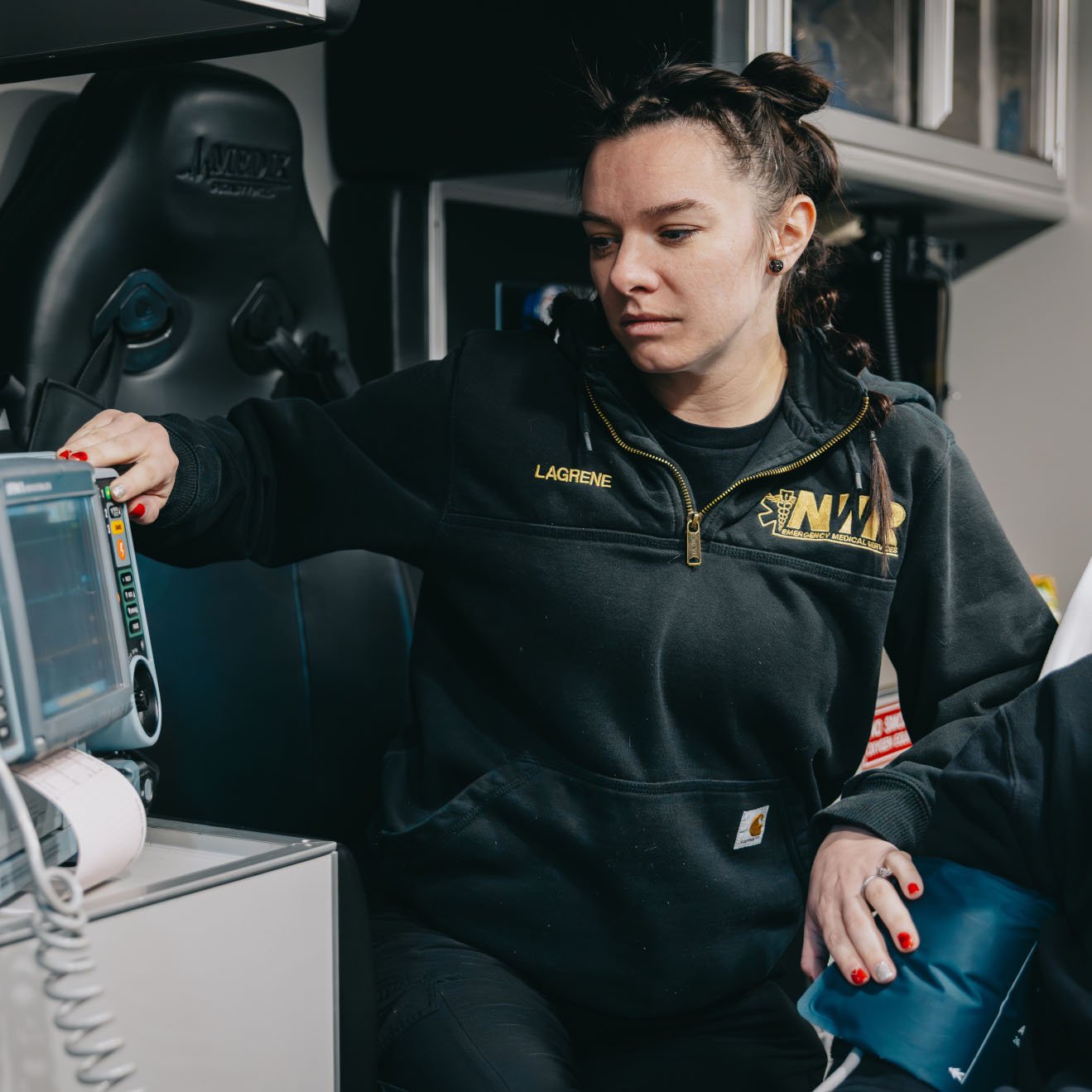
Paramedic school in Illinois runs 12 to 24 months, but the full path from first EMT class to licensed paramedic takes about two to three years.
Somebody asks you at a family dinner how long paramedic school takes. You say a year, because that is what the college website said. Then you start, and the year turns into an EMT course first, then a hiring process, then a waitlist for the next cohort, then a field internship that runs past the end of the semester, then a licensing packet sitting in a queue. Nobody lied to you. The class is a year. The path is not. This guide lays out the whole timeline, stage by stage, with realistic ranges.
Paramedic school length in Illinois is usually 12 to 24 months for the program itself. The full path is longer. Plan on about two to three years from your first EMT class to your first shift as a licensed paramedic, if you go straight through. The EMT prerequisite, time in the field, application cycles, testing and state paperwork are what stretch that number.
Below is each stage and where the delays come from. The ranges are wide on purpose, because programs differ, and anyone giving you a single number is guessing.
Paramedic school length in Illinois at a glance
Here is how the stages usually stack up:
- EMT-Basic course: roughly 3 to 6 months, depending on full-time or part-time format
- NREMT EMT exam and Illinois EMT license: a few weeks
- Working as an EMT before applying: usually 6 to 12 months, sometimes required, always smart
- Waiting for a paramedic cohort to start: 0 to 12 months
- Paramedic program: 12 to 24 months, including clinicals and field internship
- NREMT paramedic exam: days to weeks after graduation
- Illinois licensure and EMS System entry: a few weeks to a couple of months
Straight through with no gaps, that is a bit under two years. Most people land between two and three.
Stage one: the EMT course
Every paramedic program in Illinois requires a current Illinois EMT license, and most want it active and in good standing when you apply, not by the time class starts. That is where the timeline actually begins. There is no zero-to-medic route here the way some states market one. A handful of colleges sequence EMT and paramedic coursework back to back, which shortens the gap, but you still complete and license at the EMT level first.
You can take the EMT course two ways. Some colleges and academies run an accelerated version over a summer or a compressed block, usually eight to sixteen weeks, which is hard to combine with a job. The more common route is one college semester, evenings or two days a week, plus ambulance and emergency department clinical hours. Figure a standard fall or spring semester.
Either way, you finish with a course completion record that makes you eligible to test. Our step-by-step Illinois EMT guide covers that process, including the clinical requirements.
Stage two: testing and licensing as an EMT
Schedule the NREMT exam as soon as your program submits your completion. People who wait two months to test do worse than people who test in two, and you have a limited number of attempts and a defined eligibility window.
National Registry certification is not a state license. You apply to the IDPH Division of EMS and Highway Safety separately, and you also have to be entered into a Resource Hospital EMS System, whose medical director authorizes you to work under their protocols. Processing time varies. Budget a few weeks, and start the paperwork the day you pass.
Stage three: working the street
This is the stage people try to skip, and the one that changes everything after it.
Programs want it for practical reasons. Some require documented field experience. Many require a letter of commitment from an ALS transport agency before they will let you enroll, because you need somewhere to do your field internship. If you are not already working for an ALS service, getting that letter is its own project.
We want it for a different reason. Paramedic school teaches you medicine. It does not teach you how to move a patient down a narrow staircase at 3 a.m., or how to run a scene with fire on top of you. Students who worked a year as an EMT first spend their internship learning paramedicine. Students who did not spend it learning the job.
Six to twelve months is typical. If you are not sure paramedic is the right target, EMT vs paramedic vs critical care paramedic breaks down what each license lets you do, and the Illinois pay picture covers what the jump is worth.
Stage four: getting into a program
Most northern Illinois paramedic programs run one cohort a year, with applications due in the spring for a fall or late-summer start. Miss the window and you wait a full cycle.
So plan backward. Find the program you want, find its application deadline, and work back from there. Before that deadline you need your EMT license, a CPR card, immunizations, a background check, prerequisite coursework in some cases, and often an ALS sponsor letter in hand.
Prerequisites can add time on their own. Programs that prefer or require Anatomy and Physiology add a semester if you have not taken it. Take it while you are working as an EMT rather than discovering the gap in March.
Stage five: the paramedic program itself
This is the 12 to 24 months everyone quotes, and it breaks into three overlapping pieces:
- Didactic and lab: classroom and skills work in cardiology, pharmacology, airway, trauma, medical, pediatrics and OB, usually spread across two to four terms.
- Hospital clinicals: the emergency department, the operating room for airway, labor and delivery, pediatrics, ICU and psych, scheduled around the hospital's availability, not yours.
- Field internship: the capstone, and usually several months long. You ride with an ALS agency under a preceptor and run calls as team lead until you can manage patients independently.
The internship is the usual reason programs run long. Programs set a required number of team leads and patient contacts, not a number of weeks. If your unit has a slow month, or you need extra attempts on team leads, you keep riding, so a program advertised at 48 weeks can run past a year for a student who catches a quiet rotation. Ask how long recent students actually took, and build slack in.
Full-time cohorts finish in roughly 12 to 15 months. Part-time and evening cohorts built for working providers usually run 18 to 24. Neither is better. The part-time route takes longer but you can finish it while employed, which is why so many medics train while working private ambulance. A 24-hour shift with one of our medics shows what that schedule looks like.
Stage six: exam and license
The exam has changed. As of July 1, 2024, the National Registry uses a single paramedic certification examination with no separate psychomotor exam, and your program verifies hands-on competency through its terminal competency requirements. You have two years from course completion to finish testing, but do not use them. Test while it is fresh.
Then you go back to the state. Apply to IDPH for your Illinois Paramedic license and get entered into your EMS System, the same process as your EMT license with the same variable timeline. If you already work for an ALS service, your EMS coordinator usually handles system entry with you.
Most services then put new medics through a release process: orientation, protocol testing, and precepted shifts before you run as the medic. That takes weeks, not months, but it is real time.
Frequently asked questions
Can I keep working during paramedic school?
Most students do, but the load is heavy. Between class, hospital clinicals and internship ride time, you are adding a serious weekly commitment on top of a job. Part-time and evening cohorts are the realistic option if you cannot stop earning. What matters most is schedule flexibility: predictable shifts and a supervisor who will work around your clinical calendar. Private ambulance work, with 12- and 24-hour shift patterns, leaves usable blocks of weekday time.
How long does IDPH licensing take after I pass?
Processing time varies with volume, so treat any specific number you read online with suspicion. Budget a few weeks, and remember you are doing two things, not one: applying for your Illinois Paramedic license and getting entered into a Resource Hospital EMS System. Start both the week you pass. If you have a job lined up, your EMS coordinator usually runs system entry with you.
What is the fastest realistic path?
Take an accelerated EMT course, test immediately, and get hired by a busy ALS service. Use that year to finish prerequisite coursework and secure your internship sponsor, then apply to a full-time paramedic cohort as soon as you qualify. With no missed application windows and no slow rotations, that is roughly two years from your first EMT class to your first shift as a medic. Rushing the EMT year is the one shortcut we would not take, because field time is what makes internship survivable.
Related reading
- Best Paramedic Schools in Northern Illinois (2026 Ranked) (coming soon)
- How to Become an EMT in Illinois: 2026 Step-by-Step Guide
- EMT to Paramedic Bridge Programs in Northern Illinois
- EMT vs Paramedic vs Critical Care Paramedic
- EMT and Paramedic Pay in Illinois
- EMT Recertification in Illinois: Deadlines, CE Hours, Cost
Start the clock somewhere. The fastest way through this timeline is to spend the EMT years somewhere with real call volume and people who will teach you. Northwest Rescue has run 911 and interfacility calls across Northern Illinois and Southern Wisconsin since 2013, from stations in Loves Park, Rockford, Harvard, Lake in the Hills, and Delavan, Wisconsin, with in-house continuing education and ALS exposure from day one. See what is open on our careers page.