
Heart attack and panic attack symptoms overlap almost completely. What each one feels like, who presents differently, and when to call 911.
It is nine at night. Your chest feels tight, your heart is pounding, and you cannot get a full breath. Then the second wave hits — is this my heart, or am I just panicking? You do not want to be the person who called an ambulance over anxiety. You also do not want to be the person who waited. This guide covers what each emergency feels like, what should push you to call 911, and why you cannot reliably tell the difference alone.
The question of heart attack vs panic attack comes up on our calls more than almost any other. Northwest Rescue crews respond to chest pain across Winnebago, McHenry, and LaSalle counties, and a meaningful share of those patients spend minutes at the door apologizing before they let us take vitals. They are embarrassed. They think they are wasting our time.
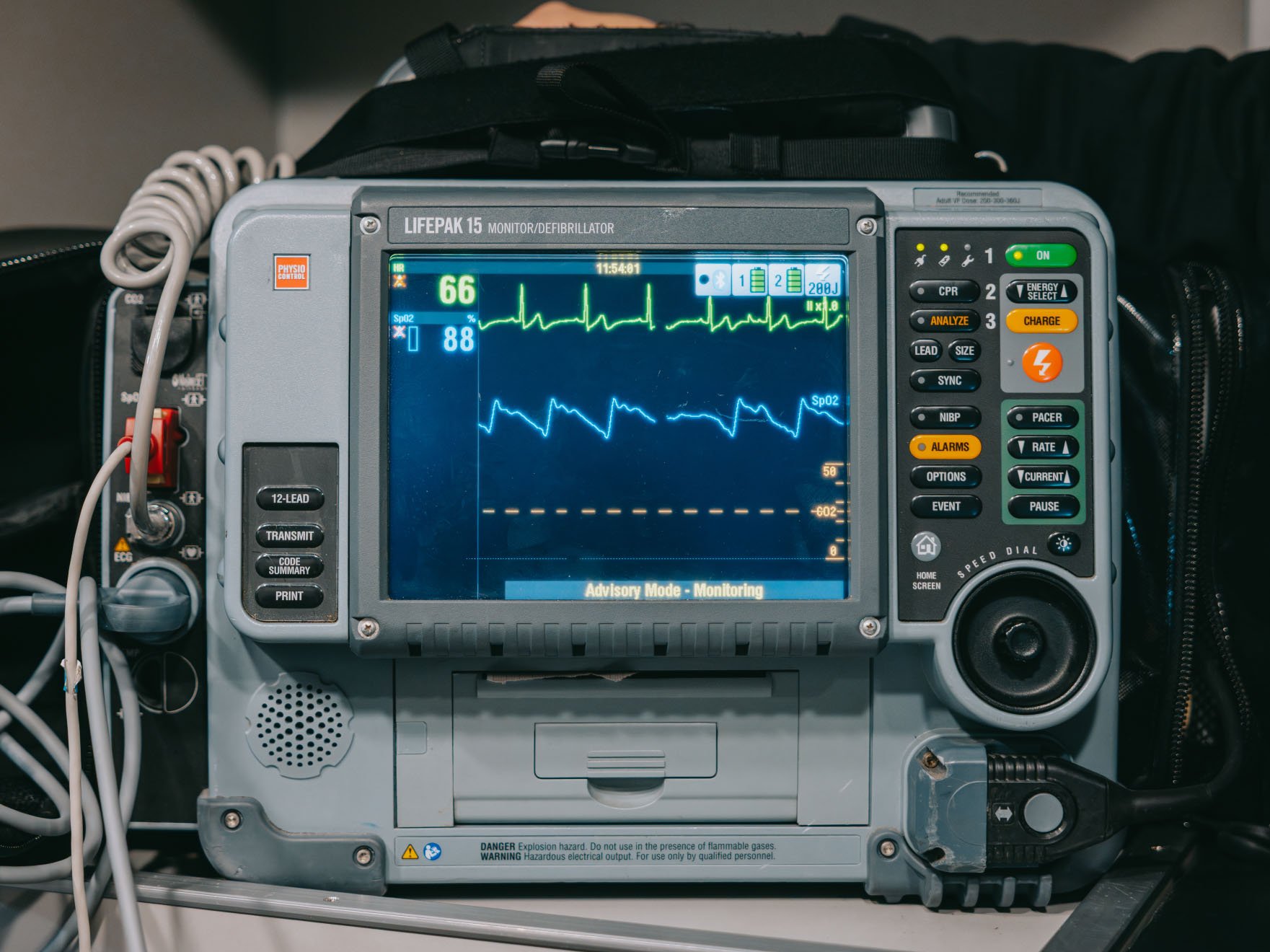
Be clear up front: separating the two is a clinical judgment requiring an ECG and blood work. Emergency physicians do not eyeball it. Paramedics do not eyeball it. The American Heart Association's guidance is that you should not take a chance on it not being a heart attack. Everything below helps you understand your body. None of it is a test for talking yourself out of calling.
Why These Two Emergencies Feel So Similar
Both run through the same alarm system. In a heart attack, blood flow to part of the heart muscle is severely reduced or cut off, usually by a blocked coronary artery. In a panic attack, your fight-or-flight response fires without a real threat. From the inside, the alarm feels identical.
Both can produce all of the following at once:
- Chest pain, pressure, or tightness
- A racing or pounding heartbeat
- Shortness of breath
- Sweating and clammy skin
- Nausea or an upset stomach
- Lightheadedness or dizziness
- A powerful sense that something is badly wrong
When the symptom lists are identical, the only thing separating the two is what is happening inside your coronary arteries, and that is invisible from the outside.
What A Heart Attack Actually Feels Like
The AHA describes the most common presentation as uncomfortable pressure, squeezing, fullness, or pain in the center of the chest, lasting more than a few minutes or going away and coming back.
Chest discomfort. Patients describe pressure more often than sharp pain — a weight, a band, a vise. Many say it did not feel like "pain" at all, which is part of why they waited.
Upper body discomfort. Pain spreading to one or both arms, the back, neck, jaw, or stomach.
Shortness of breath. With or without any chest discomfort at all.
Other signs. Cold sweat, nausea, a rapid or irregular heartbeat, unusual fatigue, or feeling lightheaded.
Symptoms often start slowly and build over minutes. That gradual onset is what makes people wait — it does not announce itself the way television taught us to expect.
What A Panic Attack Actually Feels Like
Panic attacks produce a genuinely physical event. The chest pain is real. Common features include palpitations, trembling limbs, hot flushes or chills, a choking sensation, tingling fingers, dry mouth, and a feeling of dread or fear of dying.
Two characteristics show up more often in panic:
- Speed of onset. Panic tends to come on fast and peak in roughly ten minutes.
- Intense fear as the centerpiece. Overwhelming fear is the hallmark of a panic attack rather than an accompaniment to it.
Most panic attacks resolve within five to twenty minutes. Tingling in the fingers and around the mouth, driven by rapid breathing, leans toward panic — but it is a clue, not a ruling.
The Differences That Sometimes Help And Why They Are Not Enough
Most articles hand you a comparison table. Ours comes with a warning attached.
- Onset. Cardiac discomfort often builds gradually; panic often spikes fast. But heart attacks can begin abruptly too.
- Radiation. Discomfort spreading into the jaw, neck, back, or down an arm leans cardiac.
- Effort. Symptoms that appear with exertion and ease with rest lean cardiac. But heart attacks also happen in bed.
- Trigger. A clear emotional trigger plus identical past episodes leans panic. Plenty of heart attacks occur during stress.
Every one is a tendency, not a rule. If you find yourself building a case for why you do not need to call, that is the moment to call. Our guide on when to call 911 versus driving to the ER covers that decision in detail.
Why Women, Diabetics, And Older Adults Often Present Differently
Chest pain is still the most common heart attack symptom in women. But women also report symptoms less associated with cardiac events: shortness of breath, nausea, upset stomach, pain in the shoulder, back, jaw, or arm, unusual fatigue, and anxiety. Some describe upper back pressure like a rope tied around them.
That matters enormously. If a cardiac event presents mainly as anxiety, breathlessness, and fatigue, the "it's probably just a panic attack" explanation becomes dangerously easy to accept. The AHA notes women often blame acid reflux, the flu, or normal aging. That delay is what kills.
Diabetics and older adults are the other group we worry about. Long-standing diabetes can damage the nerves carrying pain signals, so a heart attack may produce little or no chest pain. These patients may present only with sudden breathlessness, profound fatigue, confusion, or a vague sense of being unwell. If you have diabetes and something feels off, treat that feeling as a symptom.
When To Call 911 Without Hesitating
- Chest pressure or discomfort lasting more than a few minutes, or that goes away and returns.
- Discomfort spreading to your arm, jaw, neck, back, or stomach.
- Shortness of breath, with or without chest discomfort.
- Cold sweat, nausea, or lightheadedness.
- Known heart disease, diabetes, high blood pressure, high cholesterol, or family history of early cardiac events.
- This episode feels different from your usual panic attacks, or it is your first one.
- You are simply not sure.
Number seven is the important one. Uncertainty is a reason to call, not to wait.
What To Do While You Wait For The Ambulance
- Sit or lie down. Do not walk it off.
- Unlock the door and turn on an outside light. Seconds spent getting inside are seconds not spent on you.
- Have your medications ready. Names and doses, or the bottles in a bag.
- Do not drive yourself. An ALS ambulance brings the monitor and the paramedic to you; a car brings neither. If symptoms escalate behind the wheel, you become a second emergency.
- Follow the dispatcher. They may direct you to chew aspirin. Do that only if told to.
- If the person collapses and is not breathing normally, start compressions. Our hands-only CPR guide covers the technique, and someone should retrieve an AED if one is nearby.
Frequently Asked Questions
Can A Panic Attack Cause Real Chest Pain?
Yes. Panic attacks produce genuine physical chest pain, not imagined discomfort. Rapid breathing, chest wall muscle tension, and a surging heart rate create real sensations patients accurately describe as pain, tightness, or pressure. This is why the two are so hard to separate without testing. The pain being real does not tell you what caused it. If you have never been evaluated for chest pain, or this episode feels different from previous ones, treat it as cardiac until a physician with an ECG says otherwise.
How Long Does A Panic Attack Usually Last?
Most panic attacks last five to twenty minutes, typically peaking around ten minutes before easing. Some have been reported to last up to an hour. Cardiac discomfort more often persists beyond a few minutes or comes and goes in waves over a longer stretch. That said, duration is not a diagnostic test. A heart attack can produce symptoms that briefly ease and return, a common reason people delay calling. Do not sit and time your symptoms hoping they resolve on schedule.
Will I Be Embarrassed If It Turns Out To Be Anxiety?
No, and we want to retire this worry permanently. Chest pain that turns out to be non-cardiac is an enormous share of what emergency departments evaluate daily, and sorting that out is exactly what the system is built to do. Nobody on our crews thinks less of a patient whose workup comes back clean. What troubles us is the patient who sat with symptoms for two hours rather than bother anyone. Getting checked and being fine is the best outcome of that call.
Should I Take Aspirin If I Think I Am Having A Heart Attack?
Only if the 911 dispatcher or your physician tells you to. Aspirin helps during some cardiac events, but it is not appropriate for everyone. People with bleeding disorders, certain allergies, or specific medications may be harmed by it, and chest pain has causes where aspirin is the wrong move. The correct sequence is to call 911 first and let the dispatcher guide you. Never delay calling in order to hunt for aspirin, and never take someone else's prescription medication such as nitroglycerin.
Can A Smartwatch Tell Me If It Is A Heart Attack?
No. Consumer wearables can flag an irregular rhythm and record a single-lead ECG, which is useful, but they are not designed to diagnose a heart attack and miss many cardiac events entirely. A normal reading during active symptoms means very little. Our crews run a 12-lead ECG for a reason: it sees the heart from angles a wrist device cannot reach. Use the data as one input if you like, then set the watch down and call 911 based on how you feel.
What If My Symptoms Go Away Before The Ambulance Arrives?
Let the crew evaluate you anyway. Cardiac symptoms that resolve on their own are common and can signal a partially blocked artery about to close completely. This pattern of discomfort that comes, goes, and returns worse is one we see regularly, and the window between episodes is when treatment works best. You are free to decline transport after an assessment, but make that call with an ECG and vitals in hand rather than assuming that feeling better means you are fine.
Related reading
- When to Call 911 vs. Drive to the ER
- Recognizing Stroke: The BE-FAST Method
- Hands-Only CPR: A Step-by-Step Guide
- AED Basics for Illinois Businesses and Community Spaces
- When to Use a Tourniquet: A Bleeding Emergency Guide (coming soon)
Not sure whether what you feel is worth a 911 call? It is. Northwest Rescue has provided emergency response across Northern Illinois and Southern Wisconsin since 2013. Learn more about our emergency response services, and if you are having symptoms right now, stop reading and call 911.
This article is educational and is not a substitute for medical advice, diagnosis, or hands-on certified training. If you think you may be having a cardiac emergency, call 911 immediately.